
An ITFM tool is software that gives IT and finance teams complete visibility into technology costs, from cloud and SaaS spending to on-premises infrastructure, through real-time data and automated financial processes. IT Financial Management (ITFM) is the recognized industry term for this discipline, and the software category has matured significantly as organizations face growing pressure to justify every dollar of technology spend. Frameworks like Technology Business Management (TBM) now extend ITFM beyond simple cost tracking, connecting IT spend to measurable business outcomes using standardized taxonomies. Without a purpose-built platform, IT leaders in mid-market and enterprise organizations are left reconciling spreadsheets while cloud bills compound quietly in the background.
What capabilities define an effective ITFM tool?
Modern ITFM platforms transform IT spending from reactive cost tracking into proactive financial control through automation, real-time insights, and alignment with business outcomes. That shift matters because reactive tracking always lags reality. By the time a finance team spots an anomaly in a monthly report, the waste has already accumulated.
The core capabilities that separate effective IT financial management software from basic expense trackers fall into five areas:
- Real-time cost tracking and allocation. The platform captures consumption data continuously and allocates costs to the teams, applications, or services that generate them. This is the foundation of cost accountability.
- Automated data capture and system integration. Effective tools pull data directly from operational systems like CMDB and CSDM, eliminating manual data entry and the errors that come with it.
- Showback and chargeback mechanisms. Showback reports show business units what they consume without billing them. Chargeback goes further, transferring actual costs to the responsible unit. Both require accurate, granular data to earn stakeholder trust.
- Budgeting, forecasting, and financial reporting. The platform must support forward-looking financial planning, not just historical reporting. CFOs need forecasts they can defend, not estimates built on stale data.
- TBM taxonomy alignment. Technology Business Management extends ITFM by connecting IT spend to business value using standardized cost categories. Modern TBM now includes AI-assisted financial analysis and broader technology spend coverage beyond traditional IT cost centers.
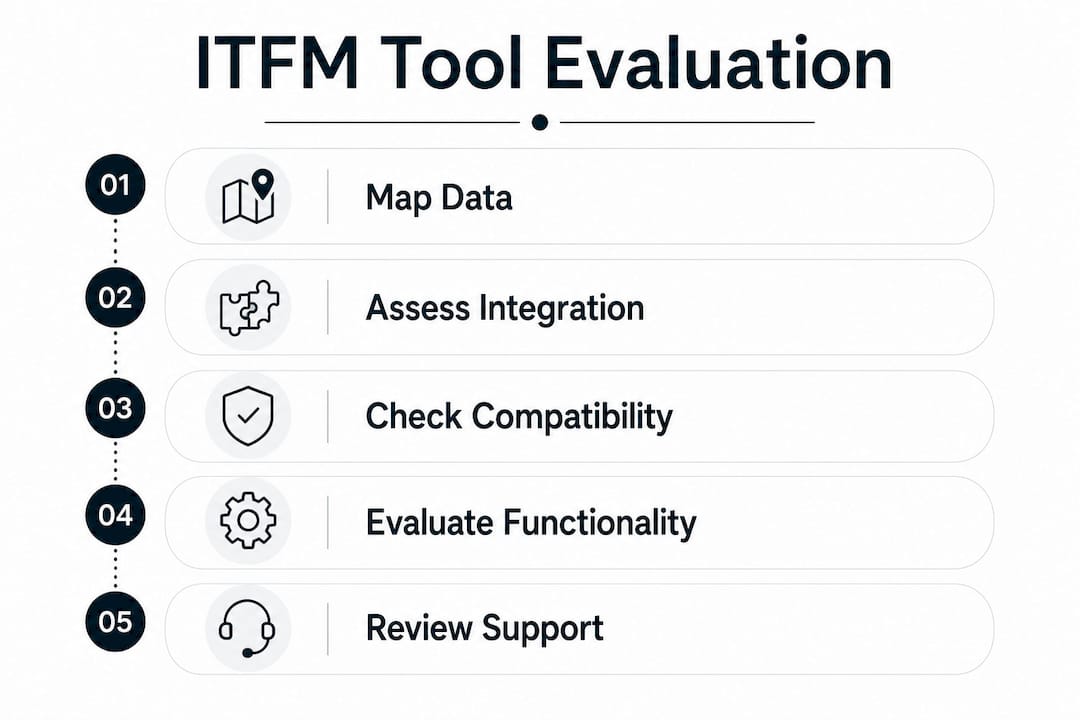
Pro Tip: Before evaluating any platform, map your current data sources. If your CMDB is incomplete or inconsistent, even the best ITFM software will produce inaccurate allocations. Data quality upstream determines cost model quality downstream.
The most overlooked capability is the quality of the underlying data model. A platform that integrates natively with your operational systems will always produce more trustworthy numbers than one that imports data through scheduled syncs. That trust is what makes financial reports credible to a CFO.

How do ITFM tools integrate with ServiceNow?
Integration architecture is the most consequential technical decision in any ITFM deployment. The difference between a native platform and a connector-based solution is not just technical preference. It directly affects data accuracy, reconciliation overhead, and CFO confidence in the numbers.
Here is how the two approaches compare in practice:
- Native platforms are built inside ServiceNow and access CMDB and CSDM data directly. There is no synchronization lag, no duplicate data store, and no reconciliation overhead. Native ServiceNow ITFM platforms maintain a single source of truth, which is essential for accurate cost allocation and CFO confidence.
- Connector-based solutions sit outside ServiceNow and pull data through APIs or scheduled exports. Every sync introduces a window where the cost model does not reflect operational reality. Reconciling discrepancies between the ITFM platform and the source system becomes a recurring task.
- Hybrid approaches use a mix of native modules and external connectors depending on the data type. These reduce some reconciliation burden but still require governance to manage data consistency across sources.
For enterprise organizations already running ServiceNow as their ITSM backbone, a native ITFM platform eliminates an entire category of operational risk. Nicus Software, cited by the Gartner Market Guide 2025, is built natively inside ServiceNow and produces CFO-ready cost allocations with no reconciliation overhead. That architectural advantage is significant when cost model data feeds executive reporting.
The practical implication is straightforward. If your organization runs ServiceNow at scale, a native ITFM solution will reduce implementation complexity and produce more accurate results from day one. If your organization does not use ServiceNow, connector-based or standalone platforms offer flexibility without the dependency.
Pro Tip: Ask any ITFM vendor to walk you through exactly where their data lives. If the answer involves a separate database that syncs with your ITSM platform, ask how often it syncs and what happens to cost allocations during the gap.
How to choose the right ITFM tool for your organization
Choosing the best ITFM tool requires matching platform capabilities to your organization’s current state, not its aspirational state. Most failed ITFM implementations start with a platform that is technically capable but organizationally premature.
The five criteria that matter most in practice:
- Stack compatibility. Does the platform integrate natively or through connectors with your existing ITSM, ERP, and cloud billing systems? Compatibility determines how much custom integration work you will carry long-term.
- Managed services availability. Most organizations lack internal ITFM expertise, and managed services options are often the deciding factor for successful adoption. A platform that offers software configuration, cost model maintenance, and stakeholder reporting as a managed service removes the talent gap problem entirely.
- Scalability across maturity levels. The platform should support foundational cost transparency today and scale to full TBM capabilities as your organization matures. ITFM platforms that scale from basic visibility to Modern TBM support evolving financial governance demands without requiring a platform replacement.
- Analyst recognition and vendor credibility. Gartner Market Guide inclusion is a meaningful signal. It indicates the vendor has passed independent scrutiny on product capability and market presence.
- Price-to-value balance for multi-cloud and SaaS environments. Enterprise platforms with deep ServiceNow integration carry higher price points. Mid-market organizations managing AWS, Azure, and a growing SaaS catalog may find that a lighter platform with strong cloud billing connectors delivers better value at their scale.
| Evaluation criterion | What to assess |
|---|---|
| Stack compatibility | Native vs. connector integration with ITSM and ERP systems |
| Managed services | Availability of full-service cost model management |
| Scalability | Path from cost transparency to full TBM maturity |
| Vendor credibility | Gartner recognition, customer references, support quality |
| Price-to-value fit | Platform cost relative to cloud, SaaS, and infrastructure spend under management |
The table above is a starting framework. Your organization’s specific mix of cloud providers, SaaS applications, and internal ITSM maturity will shift the weight of each criterion.
What are the real-world benefits of implementing ITFM software?
The practical value of IT financial management software shows up in three places: cost accountability, waste reduction, and forecasting accuracy. Each one compounds over time.
Cost accountability improves when every dollar of IT spend is mapped to a consuming team, application, or service. Without that mapping, IT operates as a shared cost pool that no business unit feels responsible for managing. With it, cost ownership becomes a shared discipline between IT and the business.
Waste reduction is where ITFM tools produce the most visible early wins. Effective ITFM platforms identify idle resources and redundant applications through continuous monitoring and AI-driven recommendations. Idle cloud instances, unused SaaS licenses, and over-provisioned Reserved Instances are common targets. These inefficiencies rarely appear in monthly finance reports because they hide inside aggregate line items.
Forecasting accuracy improves when budget models are built on actual consumption data rather than prior-year actuals plus a percentage. An ITFM platform that tracks real-time usage across AWS, Azure, Google Cloud, and SaaS applications gives finance teams the granular data they need to build defensible forecasts. That accuracy matters most during annual planning cycles, when IT leaders must justify investment requests to a CFO who has seen too many cloud budgets overrun.
ITFM software also supports showback and chargeback processes that shift financial accountability from IT to the business units generating the spend. This is not just a financial exercise. It changes behavior. When a product team sees its cloud consumption mapped to a dollar figure, it starts making different architectural decisions.
Key Takeaways
The most effective ITFM tool combines native system integration, real-time cost allocation, and managed services support to deliver financial data that IT leaders and CFOs can act on with confidence.
| Point | Details |
|---|---|
| Start with visibility | Map cost ownership before pursuing chargeback or advanced optimization models. |
| Native integration wins | Platforms built inside ServiceNow eliminate sync lag and produce more accurate cost data. |
| Managed services fill the gap | Most organizations lack internal ITFM expertise; managed service options accelerate adoption. |
| Scale matters in selection | Choose a platform that grows from basic transparency to full TBM without requiring replacement. |
| Waste reduction is the early win | Idle resources and unused licenses are the fastest path to demonstrable ITFM value. |
Why most ITFM implementations stall before they deliver value
I have seen this pattern repeat across enterprise IT organizations of every size. The team selects a capable platform, completes the implementation, and then waits for the insights to arrive. Six months later, the cost model is still incomplete, the CFO does not trust the numbers, and the project loses executive sponsorship.
The root cause is almost always the same. Organizations that attempt to implement many ITFM features at once consistently struggle. The right sequence is visibility first, accountability second, and optimization third. Trying to run chargeback before you have clean cost ownership data is like billing customers before you know what they ordered.
The second pattern I see is underestimating the data quality problem. A platform is only as good as the operational data feeding it. If your CMDB has gaps, your cost allocations will have gaps. Native integrations reduce this risk significantly because they read from the same data the ITSM team already maintains. Connector-based solutions amplify it.
The third pattern is the talent gap. ITFM is a specialized discipline that sits at the intersection of IT operations, finance, and data management. Most IT teams do not have someone who owns all three. Managed services options exist precisely for this reason, and organizations that use them tend to reach steady-state cost model accuracy far faster than those that try to build internal capability from scratch.
The future of ITFM is moving toward AI-augmented financial analysis and broader TBM scope that covers AI infrastructure and token consumption alongside traditional cloud and SaaS spend. That expansion is coming faster than most IT leaders expect. The organizations that will handle it well are the ones that have already built a clean, trusted cost model at the foundation.
— Dan
How Everythingcloud supports IT financial management at scale
Everythingcloud is a continuous cloud, SaaS, and AI optimization platform built for organizations that need real-time visibility into AWS, Azure, Google Cloud, SaaS, and AI spending. The Everythingcloud platform delivers cost transparency, automated waste detection, and financial reporting that IT leaders can take directly into CFO conversations.
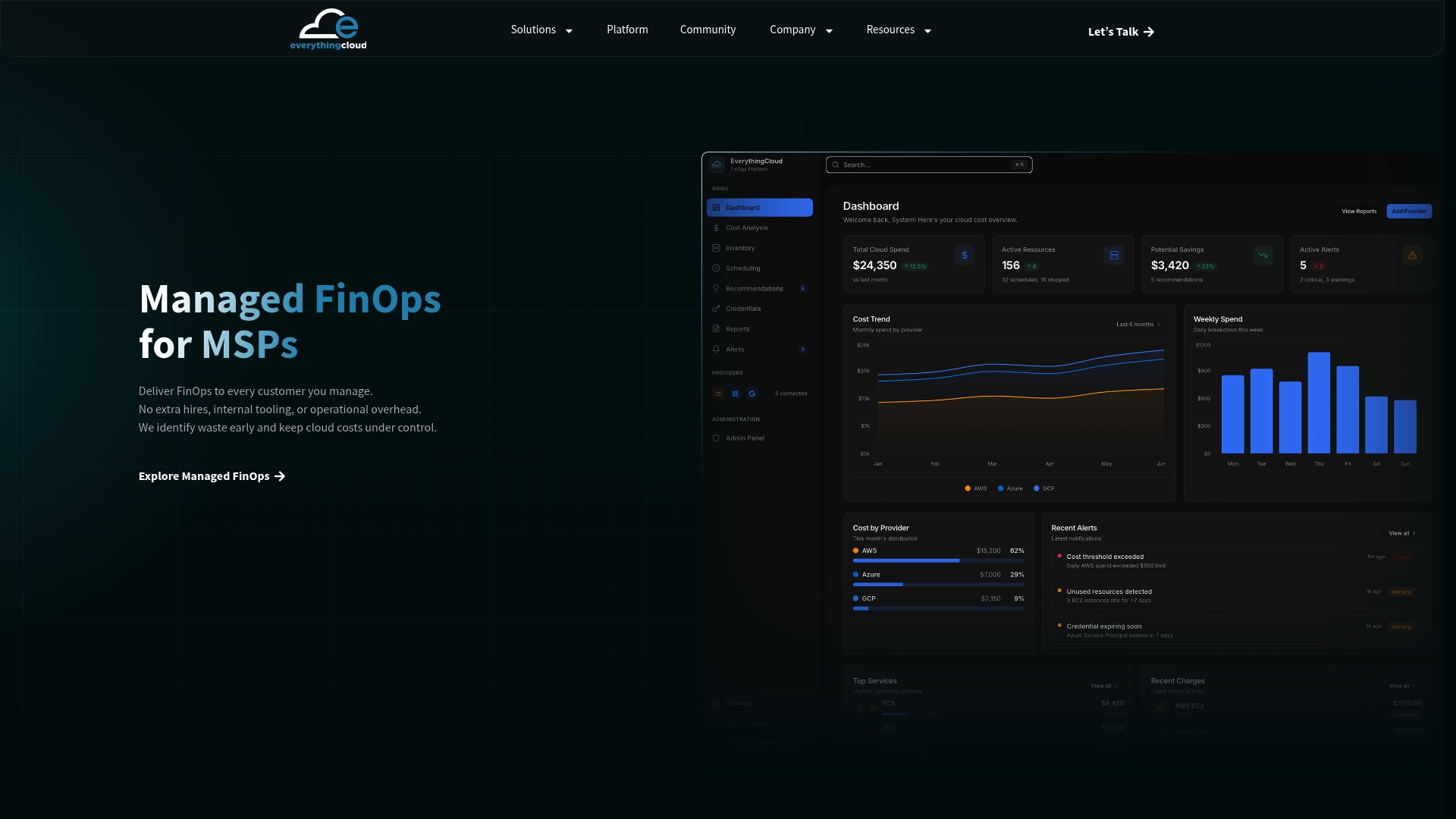
For organizations without internal FinOps expertise, Everythingcloud’s managed FinOps services cover the full function, from cost model configuration to monthly optimization reporting. For MSPs and channel partners, the platform provides a turnkey FinOps capability that creates new recurring revenue streams without requiring a custom build. If your organization is managing growing cloud and SaaS costs without a clear financial model, Everythingcloud gives you the visibility and the expertise to change that.
FAQ
What is an ITFM tool?
An ITFM tool is software that gives IT and finance teams real-time visibility into technology costs, enabling accurate cost allocation, budgeting, forecasting, and financial reporting across cloud, SaaS, and on-premises infrastructure.
How does ITFM differ from TBM?
ITFM focuses on managing and tracking IT costs. TBM extends that by connecting IT spend to business outcomes using standardized taxonomies, and modern TBM now includes AI-assisted analysis and broader technology spend coverage.
Why does ServiceNow integration matter for ITFM?
Platforms built natively inside ServiceNow access CMDB and CSDM data directly, eliminating synchronization lag and duplicate data stores. That architecture produces more accurate cost allocations and builds CFO confidence in the numbers.
What should organizations prioritize when starting with ITFM?
Start with cost visibility and ownership before pursuing chargeback or advanced optimization. Clean cost ownership data is the prerequisite for every more complex ITFM capability.
Do organizations need internal ITFM expertise to succeed?
Not necessarily. Managed ITFM services cover software configuration, cost model maintenance, and stakeholder reporting, making them a practical option for organizations with limited internal expertise in IT financial management.