
Cloud finance and operations teams cannot easily enforce accountability and cut waste across multi-cloud and AI environments without the right automation. Most single-provider tools lock vital governance and cost data behind limited integrations, outdated workflows, or sales-only licensing models. This list matches six cloud and AI optimization platforms on automation, integrations, and procurement terms so MSPs can pick an alternative that closes those gaps.
Table of Contents
EverythingCloud
At a Glance
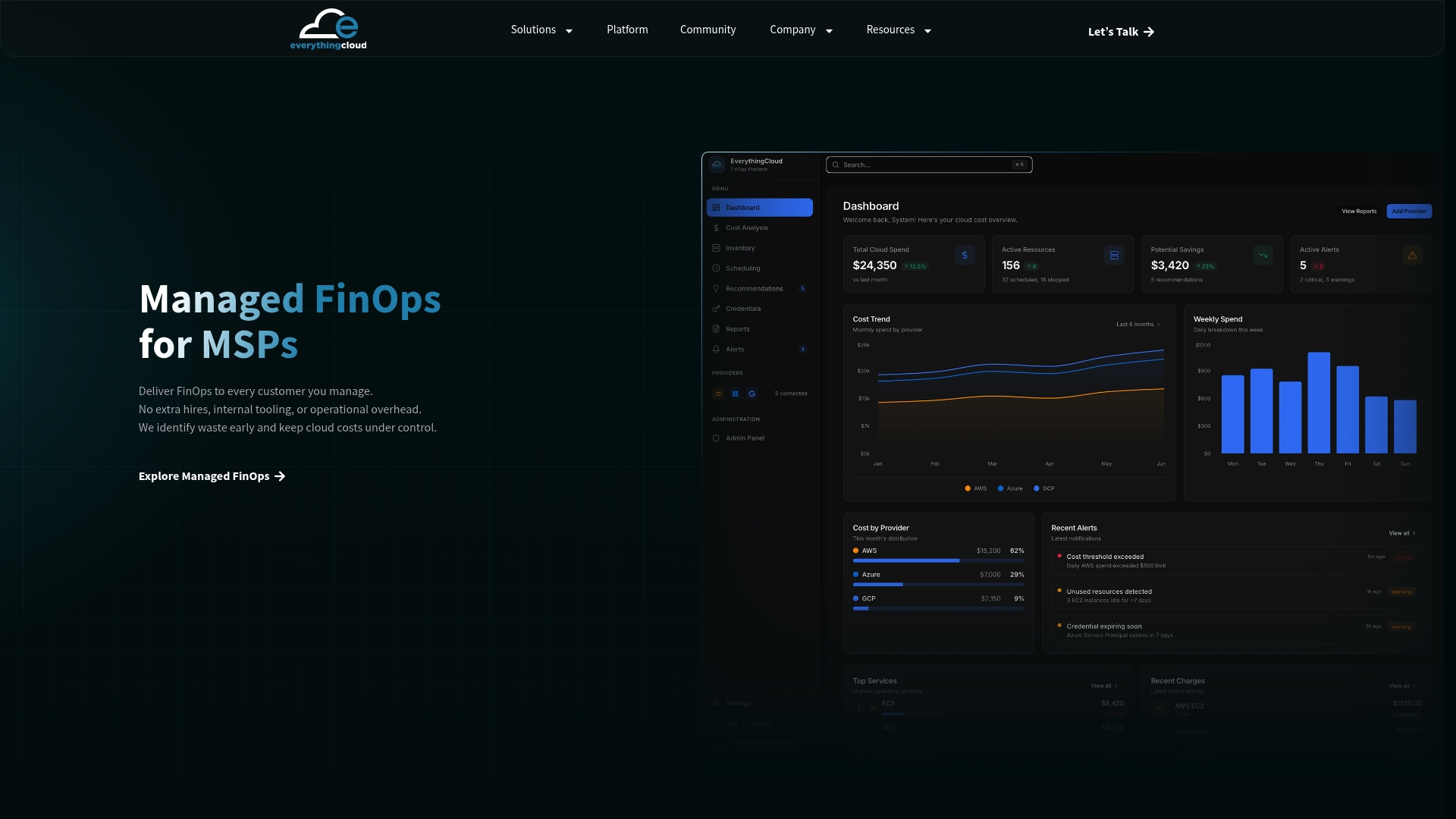
EverythingCloud uses a multitenant architecture built for MSP delivery to manage many client environments at scale. The platform combines continuous cloud, SaaS, and AI optimization with real-time visibility across AWS, Azure, and GCP. That design targets MSPs and enterprise finance teams that need repeatable FinOps operating practices.
Core Features
The platform centralizes visibility, governance, and optimization across multiple cloud providers and tenant accounts. It offers real-time cost monitoring, anomaly detection, and automated savings recommendations with execution tracking. Tag governance, allocation and ownership controls, and a multitenant architecture support scaled delivery and customizable dashboards for KPI reporting.
Key Differentiator
EverythingCloud centers on a structured FinOps operating model combined with a multi-cloud, multitenant architecture designed for automation and scale. That pairing moves beyond single-tenant cost tools to a framework MSPs can replicate across customers. The model also includes monthly AI-powered executive reports to keep leadership informed.
Pros
The platform gives MSPs a single pane for AWS, Azure, and GCP spend and governance so teams reduce manual reconciliation between providers. Pre-built workflows and automation lower repetitive tasks and speed policy enforcement across clients. The vendor states the product carries SOC 2 and ISO certifications, which supports enterprise security and compliance conversations.
Cons
- Limited third-party integrations beyond major cloud providers may restrict integration with specialized SaaS cost sources or niche billing systems.
Notable Integrations
- Amazon Web Services (AWS)
- Microsoft Azure
- Google Cloud Platform (GCP)
Who It’s For
MSPs that deliver managed cloud services and need a repeatable FinOps offering will get the most value. Enterprise cloud finance and operations teams that require governance across AWS, Azure, and GCP also fit. Small teams with a single cloud account will likely find the platform more than they need.
Unique Value Proposition
FinOps in a Box lets MSPs launch managed FinOps, cloud optimization, SaaS optimization, and AI optimization services without building their own tooling or operating model. That approach shortens time to market for new services and creates an offer you can package for recurring revenue. It also centralizes automation and reporting so you can sell measurable month to month improvements.
Real World Use Case
An MSP deploys EverythingCloud to unify billing and tag enforcement for 30 customer accounts across AWS and Azure. Automated recommendations and execution tracking reduce unused instances and fix tagging gaps. Monthly AI reports make it easier to show customers savings and assign cost owners.
Pricing
Pricing is not publicly listed and the vendor presents the product as informational only. Expect vendor pricing to require a sales conversation with options for MSP licensing and enterprise arrangements. Training or onboarding fees may apply because of the feature set.
Website: https://everythingcloud.com
Finout
At a Glance
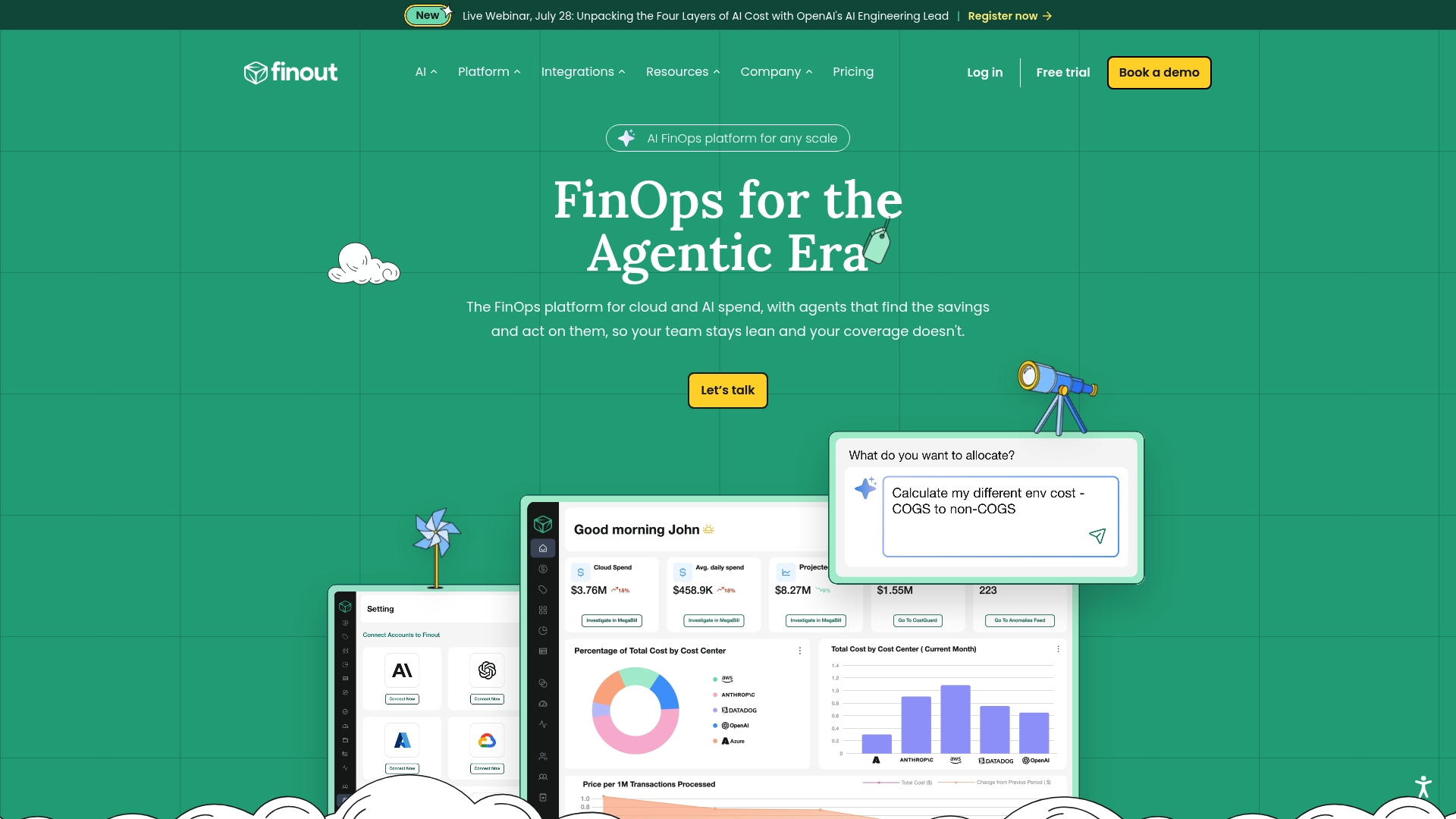
AI powered virtual tagging allocates costs in real time across cloud and AI services. The system centralizes cloud and AI spend into a single dashboard and maps expenses to teams and projects automatically. The vendor highlights transparent pricing tied to committed spend and a focus on security and compliance.
Core Features
A centralized dashboard aggregates cloud and AI spend and exposes shared cost and expense reallocation workflows for finance and engineering teams. AI powered virtual tagging automates cost allocation so ownership and billing follow resource usage without heavy manual tagging. The platform also includes financial planning and budgeting tools plus anomaly detection and reporting dashboards for operational visibility.
Key Differentiator
The standout capability is AI powered virtual tagging that applies allocation rules across multiple cloud and AI services in real time. That approach reduces manual tag hygiene and speeds cost attribution for teams and cost centers. Organizations with complex, multi cloud environments will see allocation happen faster than manual processes allow.
Pros
Finout delivers strong cost attribution and spend visibility through automated tagging and a single source of truth for finance and cloud teams. The product offers a clean user interface that helps infrequent users find insights without heavy training. The roadmap and development cadence suggest continued feature additions, and the platform supports a wide set of integrations to join observability, data, and cloud tooling.
Cons
- Less comprehensive spend tracking than some competitors like CloudZero or CloudHealth, which can matter for highly specialized billing needs.
- Navigation can be complex for new users, and some teams will require formal training to get full value.
- Reporting features are not always intuitive for stakeholders who expect canned financial statements or standard GL exports.
- A few users report the platform feels less straightforward than alternatives during initial setup.
When It May Not Fit
If your team needs every possible tracing and metadata point for billing, this product may fall short compared with platforms that provide deeper spend telemetry. Organizations with limited training bandwidth will face a learning curve before the platform becomes self service. Smaller teams with simple single cloud setups will likely find the platform more capability than they need.
Notable Integrations
Finout connects with major cloud providers and data platforms, including AWS, GCP, and Azure, plus OCI, Kubernetes, Snowflake, Databricks, and Datadog. Those integrations let you pull cost, usage, and telemetry from infrastructure and analytics services into the same cost model. The breadth of connectors helps reconcile AI and cloud spend across tooling silos.
Who It’s For
Large enterprises and cloud teams managing extensive, diverse cloud and AI infrastructure will get the most from Finout. The platform fits organizations that need automated allocation and centralized financial planning tied to engineering usage. Teams running multi cloud estates and AI workloads will benefit from tagging automation and cross platform integrations.
Real World Use Case
A multinational corporation uses Finout to allocate cloud costs automatically to departments and projects. That setup identifies waste and surfaces AI model bill spikes quickly for engineering and finance. The result is faster insight into who consumes what and clearer decisions on optimization and budget reallocation.
Pricing
Pricing is not listed in this summary. The vendor states pricing aligns with committed spend and is structured around customer commitments and usage tiers. Prospective buyers should request a formal quote to see how committed spend maps to licensing and services.
Website: https://finout.io
CloudNuro

At a Glance
CloudNuro reports a healthcare customer reduced Microsoft 365 overspend by 18%. The platform combines visibility for cloud, SaaS, and AI with governance and automated actions that target wasted spend and compliance gaps. The vendor states deep integration with over 400 apps and services, which supports multi cloud and multi SaaS environments.
Core Features
CloudNuro discovers SaaS applications with real time identification and tracks cloud and AI workloads across accounts. It pairs governance and compliance controls with automation to remove risky access and retire unused licenses. Cost optimization and spend forecasting feed into workflow automation so teams see recommendations and can apply policy driven actions.
Key Differentiator
CloudNuro unifies cloud, SaaS, and AI into one accountable governance layer with automated cost savings and security support. That single governance plane links spend forecasting to policy enforcement and automated remediation so finance and security teams share one source of truth. The approach favors outcome tracking over manual reconciliation.
Pros
The product gives clear visibility across SaaS, cloud, and AI workloads, which reduces blind spots when you manage many subscriptions. Automation cuts repetitive governance tasks and can lower manual headcount for license recycling and access removal. Industry recognition from Gartner and the Chicago Innovation awards signals market traction, and fast deployment claims suggest teams get recommendations quickly.
Cons
-
Limited public user reviews and detailed customer feedback make it hard to judge day to day usability.
-
No public breakdown of standard pricing tiers; CloudNuro lists outcome based pricing which may require negotiation.
-
Setup and ongoing management could be complex for very large or highly customized estate, according to vendor notes.
When It May Not Fit
If your organization requires extensive third party user reviews before buying, CloudNuro may feel risky because public feedback is sparse. If you need published, fixed tier pricing, outcome based models may not match procurement rules. Organizations with minimal SaaS footprint will not leverage the governance layer fully.
Notable Integrations
-
Microsoft 365
-
Slack
-
Discord
-
Klarna
-
Amazon Web Services
-
Google Cloud Platform
-
Azure
-
GCP services
Who It’s For
Large enterprises and IT organizations that need unified governance across SaaS, cloud, and AI will find CloudNuro relevant. The platform targets central IT, cloud teams, and procurement groups that want one place to reconcile spend, compliance, and lifecycle tasks. MSPs with enterprise clients may also use it to offer managed governance services.
Real World Use Case
A healthcare provider reduced Microsoft 365 overspend by that reduction above and gained clearer SaaS visibility across multiple cloud accounts. They also used the automation features to accelerate license reclamation and tighten access controls. That outcome freed budget and simplified audits for compliance teams.
Pricing
CloudNuro lists Outcome Based Pricing. The vendor does not publish standard tiered rates publicly, so buyers should request pricing scenarios that map to expected savings or governance targets.
Website: https://cloudnuro.ai
nOps
At a Glance
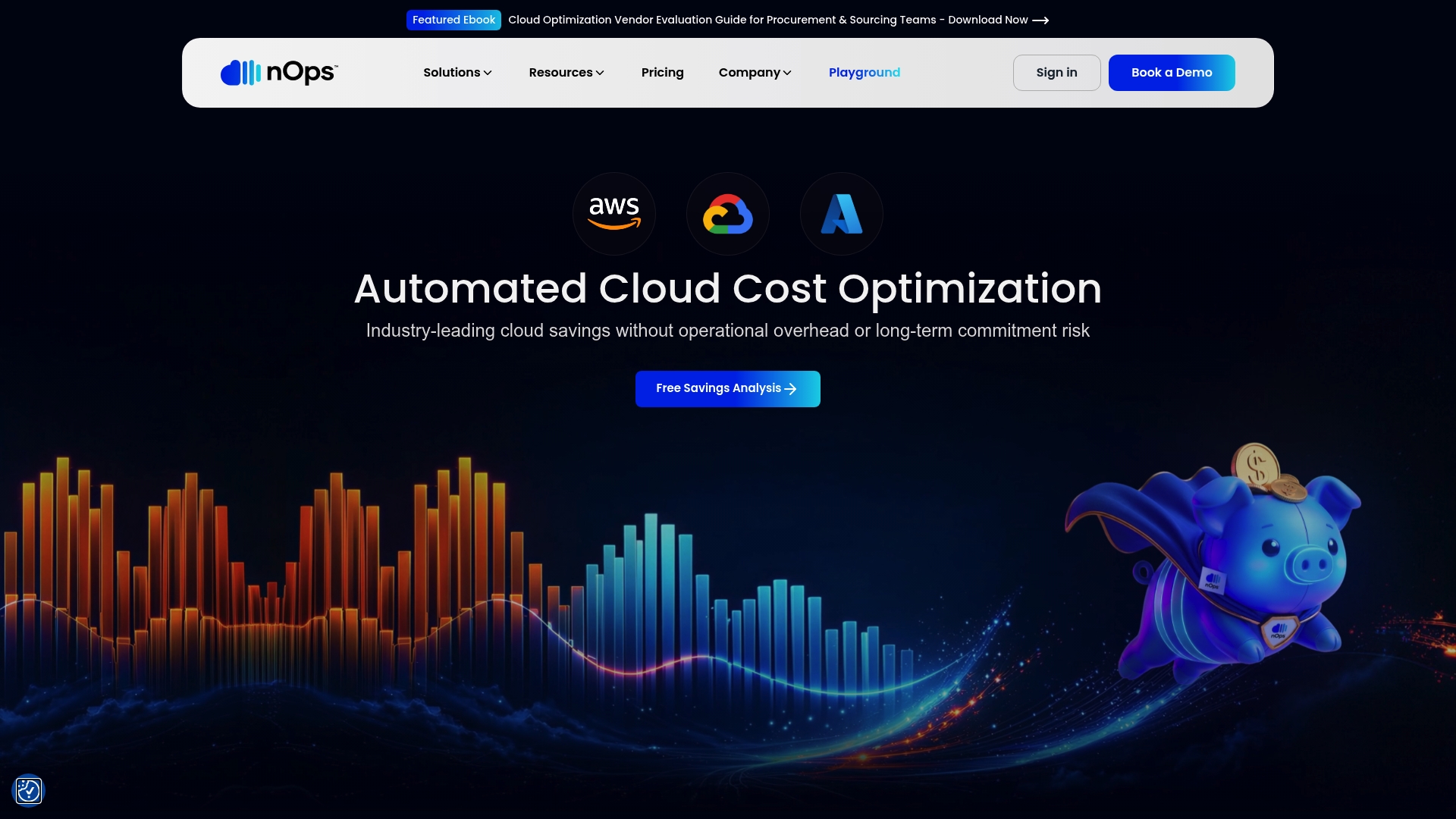
nOps reports it manages over $4 billion in annual cloud spend across startups and enterprises. The platform advertises continuous rebalancing of commitments that runs hourly to capture discounts. That scale and automation aim to reduce manual FinOps work while keeping teams informed.
Core Features
nOps collects cost and usage data across AWS, Azure, Google Cloud, Kubernetes, SaaS, and GenAI platforms and presents a unified view with dashboards and detailed reports. The product automates rightsizing and resource allocation, surfaces AI driven recommendations, and runs continuous commitment rebalancing without locking accounts into long term commitments. Anomaly detection and automated commitment management close the loop between detection and action.
Key Differentiator
The defining capability is AI driven commitment rebalancing that adapts frequently to capture discounts across multiple cloud providers without forcing long term lock in. That mechanism targets unused or misallocated commitments and repositions spend automatically, so procurement and engineering teams do not have to track commitment windows manually.
Pros
The platform gives clear visibility into cloud infrastructure costs and resource utilization, which helps FinOps and engineering teams reconcile spend. Automation of rightsizing and commitment handling reduces repetitive tasks and can shorten the optimization cycle. nOps supports multiple cloud providers and provides detailed analytics, and the vendor advertises a G2 rating of 4.8/5. Onboarding is reported as quick with minimal infrastructure impact.
Cons
-
Clunky interface reported by some users. This can slow adoption for less technical stakeholders.
-
Slow report load times and complex findings may delay decision making during tight review cycles.
-
Latency and usability issues reported outside the US could affect remote or global teams.
-
Pricing for active cost management is not purely usage based and may feel opaque to teams that expect per hour billing.
When It May Not Fit
If your operations are primarily outside the US and you need consistently low latency, nOps may not meet performance expectations. If your team needs instant, lightweight reporting for business users, the reported slow loads and dense findings may impede fast decision cycles. Smaller teams that want a free end to end solution may find the paid model unnecessary.
Who It’s For
This product fits IT and finance teams managing large, multiple cloud estates that need automation and detailed cost insight. It suits organizations that run several cloud accounts and want to reduce manual effort around commitments, rightsizing, and anomaly detection while retaining control over changes.
Real World Use Case
The vendor says a mid sized enterprise connected multiple cloud accounts to nOps, automated reserved instance and savings plan adjustments, and reduced its cloud bill by over 50%. In practice, teams get ongoing recommendations, automated rebalancing, and consolidated reporting that together shorten optimization cycles and free engineering time.
Pricing
nOps offers a free initial savings analysis. Active cost visibility and allocation are available for a fixed fee based on cloud spend, or as a percentage of realized savings for autonomous optimization. Exact fees vary by account size and scope.
Website: https://nops.io
Kalibr8
At a Glance
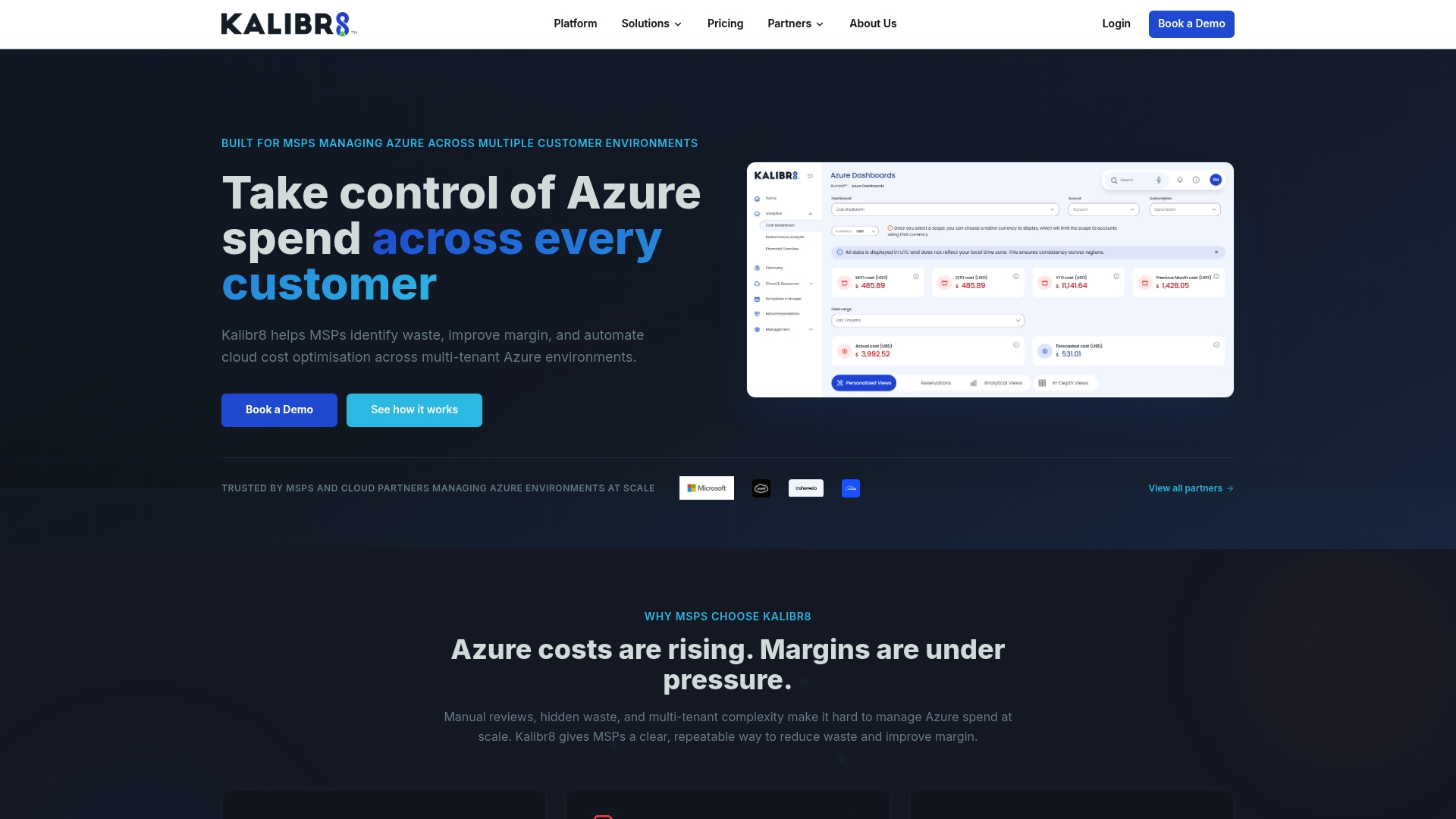
Kalibr8 provides multi-tenant visibility across all customer Azure tenants from day one. In a cloud provider comparison for MSPs, Kalibr8 focuses squarely on billing reconciliation, automated cost assessments, and governance tied to Azure. The vendor also highlights availability through major distributors and Azure Marketplace to simplify procurement.
Core Features
Kalibr8 consolidates cross tenant telemetry into a single view with automated efficiency assessments that attach an estimated impact to each recommendation. It performs billing reconciliation and cost normalization against CSP distributor invoices while tracking reserved instance and savings plan utilization and future modeling. The platform adds anomaly detection, tagging and budget governance automation, and customer branded reports to support renewals and upsell conversations.
Key Differentiator
Kalibr8 is built specifically for MSP workflows with multi tenant controls and channel integrations that match distributor and marketplace procurement. That focus shifts common FinOps tasks like reconciliation and reporting from manual spreadsheets to automated, repeatable flows designed for reseller and managed service operations.
Pros
Kalibr8 automates repetitive tasks such as billing reconciliation, standardized assessments, and governance enforcement so your engineering team spends less time on billing disputes. The platform includes proactive cost controls and realtime overspend alerts to reduce surprise charges and margin erosion. Automated, customer branded reporting and sales signal intelligence help you present savings and upsell opportunities during renewals.
Cons
-
Third party reviews indicate some users find setup and initial onboarding time consuming, with a learning curve for complex features.
-
Pricing is based on total cloud infrastructure under management, which can grow costly as you scale large accounts.
-
The product focuses on Azure only, which limits MSPs that need a single product for multi cloud customers.
When It May Not Fit
If your MSP runs large, multi region Azure deployments with bespoke networking and compliance needs, expect additional customization and integration work. If you require a single pane for AWS and Google Cloud alongside Azure, this Azure focused approach will feel limiting. Smaller MSPs that prefer flat per seat pricing rather than usage scaled billing may find the commercial model mismatched to their margins.
Who It’s For
Kalibr8 suits MSPs managing multiple Azure customer tenants who need automated cost controls, billing reconciliation, and branded reporting. Channel focused teams and distributors who sell Azure services will benefit from the procurement hooks and multi tenant workflows. It matches teams aiming to protect and grow cloud delivery margins while reducing manual billing work.
Real World Use Case
An MSP uses Kalibr8 to reconcile CSP distributor invoices against tenant usage and normalize costs for accurate customer billing. The platform runs automated efficiency scans and produces branded reports for each client, which shortens dispute resolution time. The result is faster onboarding for new tenants and clearer renewal conversations backed by quantified savings.
Pricing
Pricing is based on the total customer cloud infrastructure under management, scaling with usage. The vendor states there are no minimum spend, long term contracts, or setup fees, which keeps initial procurement straightforward.
Website: https://kalibr8.io
Spotto
At a Glance
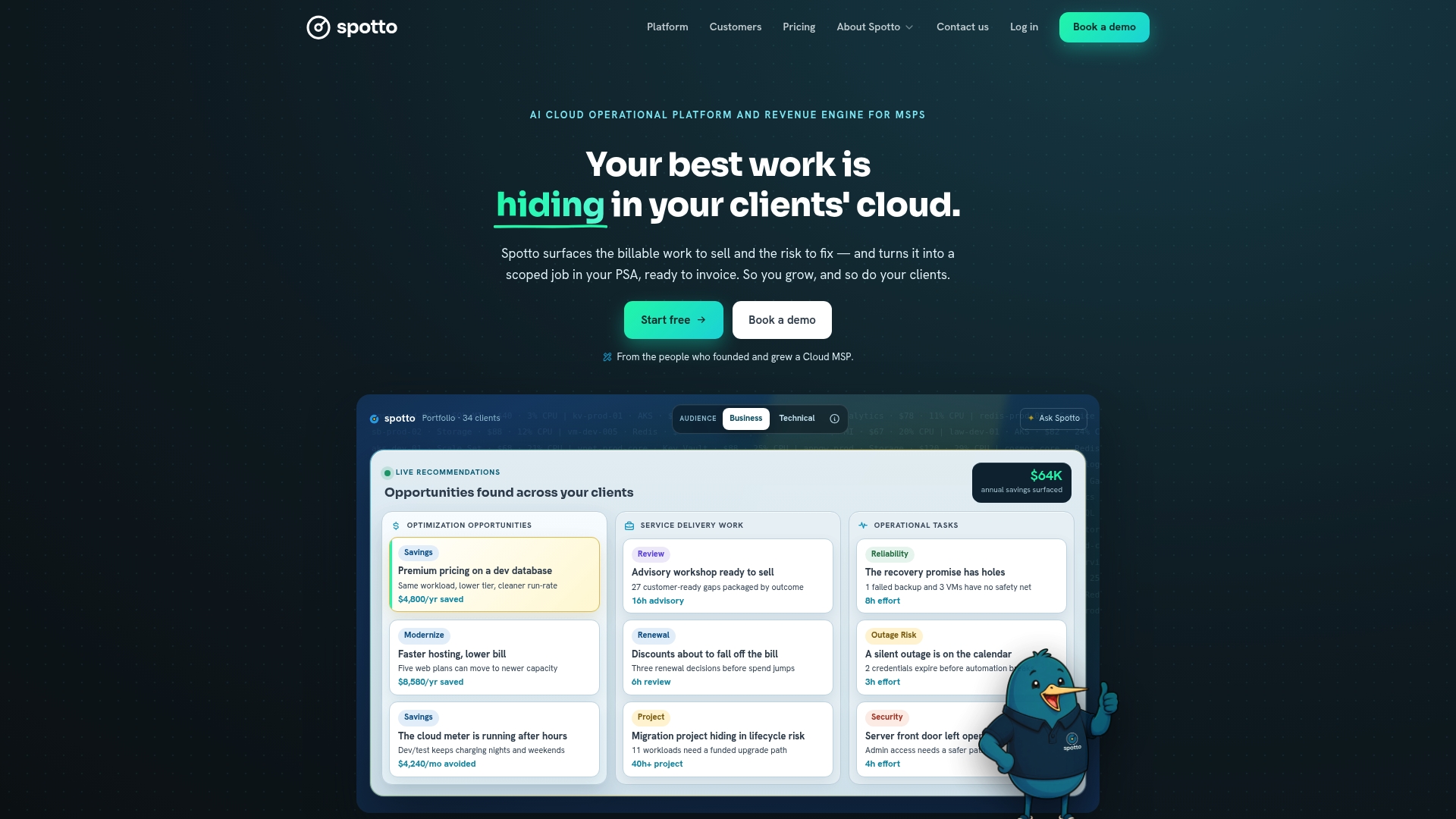
Setup takes about an hour with read only access, so MSPs can onboard multiple Azure clients quickly. Spotto turns detected issues into invoice-ready jobs that teams can scope and hand to billing. The platform centers on daily, prioritized recommendations across cost, security, and operations.
Core Features
Spotto uses AI to detect billable work, security risks, and performance gaps and then scopes those findings into jobs ready for invoicing and tracking. It aggregates cost, security, performance, and operational insights across multiple client Azure environments while letting you keep existing PSA and ticketing workflows. The product supports Azure now and lists AWS as upcoming, and setup is designed to be fast with read only access for safety.
Key Differentiator
Spotto focuses on converting cloud insights into scoped, invoice ready work that a service desk can act on. That job centric output moves cloud management from passive reporting to a sales motion. The model fits MSPs that need concrete, sellable project tickets instead of raw findings.
Pros
The interface is clean and reduces the noise that often buries actionable items. Spotto surfaces a high volume of prioritized recommendations, which lets your engineers focus on billable work instead of chasing noncritical alerts. It connects to existing PSA and ticketing tools so teams do not replace their operational stack while gaining a steady pipeline of scoping opportunities.
Cons
-
Reporting functions can feel limited or confusing for teams that need deep, custom analysis.
-
Users without technical backgrounds report a noticeable learning curve before they can use recommendations fluently.
-
Some customers report inconsistent support responsiveness, which can slow project scoping.
-
Current platform coverage is Azure only, which restricts multi cloud MSPs until AWS support arrives.
When It May Not Fit
If you manage large AWS footprints today, Spotto remains a partial fit while AWS support is on the roadmap. Teams that need highly detailed custom reports for compliance audits may find the reporting features lacking. Organizations that expect rapid, hands on vendor support during onboarding should plan for mixed responsiveness.
Notable Integrations
-
ConnectWise — ticketing and workflow handoff
-
Kaseya — PSA and automation connectors
-
Jira — ticket creation and developer workflows
-
Azure — agentless visibility and analysis
Who It’s For
MSPs that manage multiple Azure clients and want to convert cloud findings into sellable projects will get the most value. The platform suits teams that prioritize revenue generation from existing managed services and that can adapt their ticketing workflows to accept scoped jobs. Smaller shops without Azure portfolios will not get full value.
Real World Use Case
An MSP connects Spotto to several Azure tenants and receives daily, prioritized recommendations for cost savings, security fixes, and modernization work. The team converts high priority items into scoped, invoice ready projects and pushes them into the PSA for sales and delivery. Routine maintenance tasks are automated while advisory work is sold as projects.
Pricing
Pricing is not published here. The product entry lists pricing as informational only, which suggests you must contact the vendor for commercial terms and tier details.
Website: https://spotto.ai
Comparison of Alternatives
MSPs and enterprise finance teams evaluating cloud providers will find that selecting the right solution for scalability and optimization practices depends on specific operational needs. Solutions differ not only in their core capabilities but also in how they address integration, automation, and governance challenges faced by organizations managing complex cloud estates.
Automation and Integration
Automation capabilities vary across platforms in ways that significantly impact user workflows. Finout offers AI-powered virtual tagging to automate expense allocation across diverse workloads, reducing dependency on manual processes. This feature is particularly beneficial for enterprises managing intricate multi-cloud environments, where rapid attribution is essential. In contrast, EverythingCloud emphasizes repeatable FinOps workflows coupled with real-time insights across vendors, offering a governance framework through a multitenant design. For teams requiring SaaS and AI workload discovery, CloudNuro extends its offering by pairing identification tools with compliance monitoring to mitigate risk and reveal optimization opportunities.
Governance and Scalability
Governance frameworks and scalability options show notable differences among competitors. Kalibr8 targets MSPs operating within Azure by facilitating organization-specific billing reconciliation mechanisms along with branded reporting tools, streamlining customer-facing interactions. Spotto separates itself by converting operational insights into ticket-ready scopes and deliverables, adapting to workflows centered on service desks. Conversely, EverythingCloud’s FinOps in a Box approach provides a packaged operational model for MSPs delivering managed services, integrating scalability with structured optimization and dashboards for external reporting.
Best Fit
- MSPs managing multitenant client environments should choose EverythingCloud for its scalable, repeatable FinOps tools.
- Teams emphasizing automated cost allocation and tagging can benefit from Finout’s AI-driven virtual tagging mechanisms.
- Enterprises prioritizing SaaS discovery and compliance may find CloudNuro integrates uniquely with their requirements.
- MSPs focused on Azure-centric solutions aligned with distributor workflows should adopt Kalibr8 for channel-focused tools.
- Organizations seeking scoped projects and deliverables based on cloud insights may prefer Spotto’s job-centric approach.
Our Pick
EverythingCloud delivers a scalable multitenant architecture purpose-built for MSPs and teams managing diverse cloud environments. By unifying structured FinOps practices with multi-cloud visibility and governance, it offers operational models designed for repetition and scale. However, teams that prioritize hands-on reporting and support for scoped deliverables may find better alignment with Spotto’s scoped invoicing framework.
Manage your cloud operations effectively by choosing the right optimization platform detailed below.
| Product | Core Feature | Best For | Pricing | Notable Limitation |
|---|---|---|---|---|
| Everythingcloud | Multitenant cloud management with real-time cost optimization | MSPs and enterprise finance teams | Price not published | Limited third-party integrations beyond major cloud providers |
| Finout | AI-powered virtual tagging for automated cost allocation | Large enterprises managing diverse infrastructures | Price not published | Navigation complexity for new users |
| CloudNuro | Unified governance across cloud, SaaS, and AI environments | Enterprises needing centralized spend management | Price not published | Sparse public user reviews |
| nOps | Automated commitment rebalancing for continuous cost savings | IT and finance teams managing large cloud estates | Price not published | UI usability issues reported by some users |
| Kalibr8 | Billing reconciliation focused on Azure multi-tenant environments | MSPs managing Azure client tenants | Price not published | Limited to Azure with no multi-cloud support |
| Spotto | Daily recommendations converted into actionable, invoice-ready jobs | MSPs selling work from cloud findings | Price not published | Open road map for AWS support |
How Can MSPs Address Cloud Margin Leak and Complex Multi-Cloud Challenges?
The challenge of capturing cloud margin without compounding cost inefficiencies grows quietly. MSPs and enterprise teams need real-time visibility across AWS, Azure, and Google Cloud, paired with automation that stops margin erosion early. Everythingcloud builds on this by offering a continuous cloud, SaaS, and AI optimization platform designed for managed FinOps at scale. It delivers automated savings recommendations, multitenant governance, and monthly AI-powered reports that clarify where cloud spend drains value.
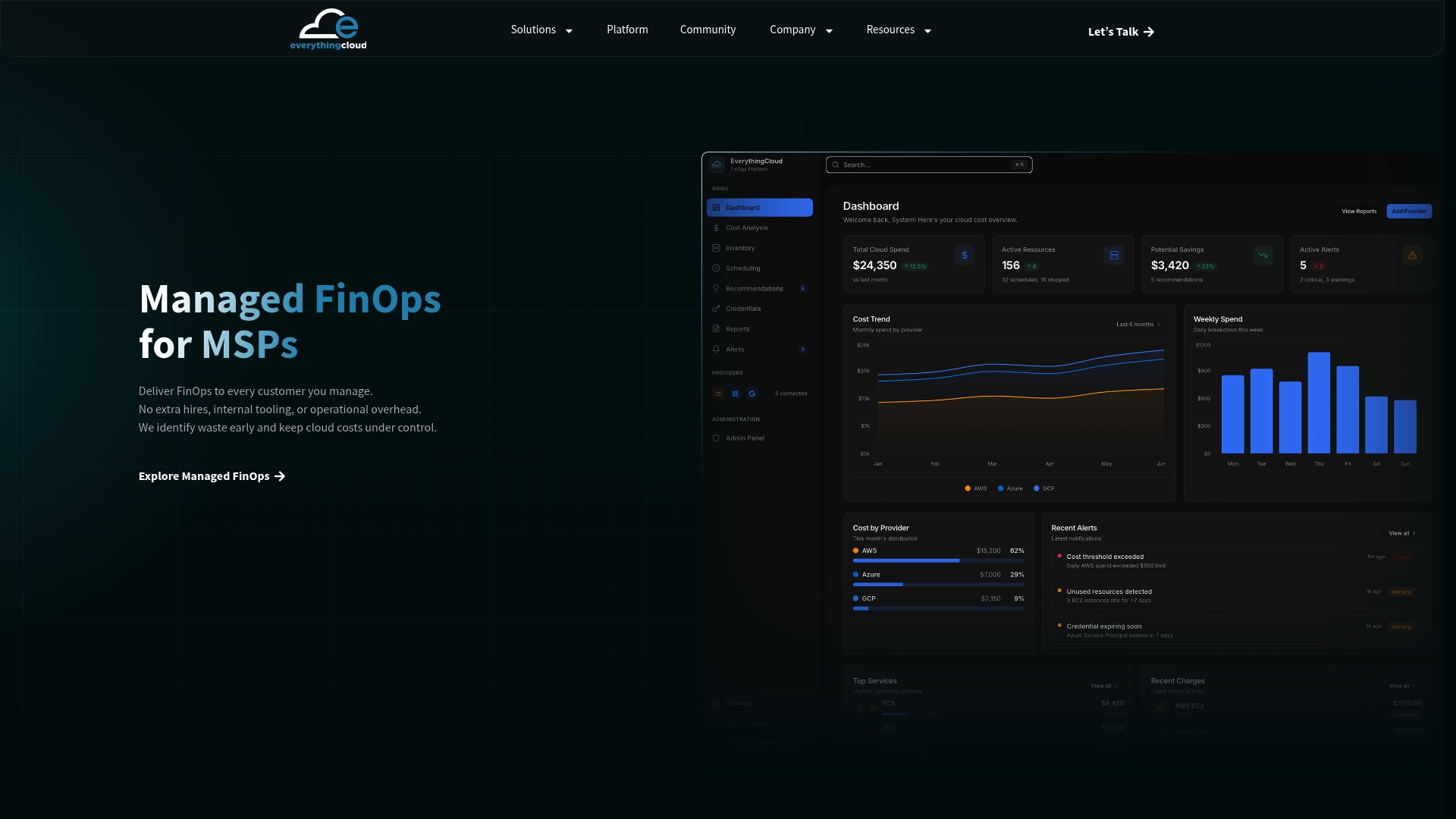
MSPs seeking to tame cloud provider complexity and offer repeatable FinOps services can rely on Everythingcloud to reduce manual reconciliation and automate cost control. Visit Everythingcloud to see how you can import your cloud spending data and start tracking optimization across multiple providers in real time.
FAQ
How does Everythingcloud optimize multi-cloud and AI environments?
Everythingcloud centralizes visibility, governance, and optimization across multiple cloud providers. Its real-time cost monitoring and automated savings recommendations empower teams to manage costs effectively across AWS, Azure, and GCP, making it a fitting choice for MSPs seeking efficiency in cloud spending.
What is the difference between Finout and Everythingcloud?
Finout excels with its AI-powered virtual tagging that applies allocation rules across various cloud and AI services in real time, reducing manual tag hygiene. Everythingcloud, on the other hand, provides a structured FinOps operating model designed specifically for MSPs, catering to automated savings and reporting needs.
Which platform offers better automation features for cost control?
Everythingcloud automates savings recommendations and execution tracking, allowing MSPs to minimize manual tasks. Its pre-built workflows help enforce policy and governance across clients, which streamlines operations significantly for managed service teams.
Can I use Everythingcloud for a small team managing single cloud accounts?
While Everythingcloud is designed for MSPs and larger enterprises, small teams can also benefit from its features. However, they might find its capabilities more than they need if managing only a single cloud account.
What integration options does Everythingcloud have?
Everythingcloud integrates with major cloud providers like AWS, Azure, and GCP, allowing centralized management of spend and governance across platforms. This makes it easier for MSPs to oversee multiple client environments from a single interface.