
If you’re an MSP or Microsoft CSP shopping for a CloudCheckr alternative, start with one question: do you want a better dashboard, or do you want the cost work done and billable? Most tools on this list answer the first. The right pick depends on whether your team has the people to turn findings into fixes.
Full disclosure: EverythingCloud publishes this article and is included as an option. We’ve tried to describe every other vendor fairly and only from what’s publicly known.
TL;DR
- CloudCheckr alternatives fall into three groups: native cloud tools, FinOps platforms built for in-house teams, and MSP-first platforms built for multi-tenant delivery.
- Native tools like AWS Cost Explorer are useful, but they cover one cloud and stop at reporting.
- For an MSP, the features that matter are multi-tenancy, white-label reports, coverage across Azure, AWS, Google Cloud, Microsoft 365 and AI spend, and tracked work.
- Visibility matters, but someone still has to own the work. That’s the real gap between a dashboard and a recurring service.
- EverythingCloud is built to work through MSPs, cloud partners and distributors, with the partner owning the customer relationship.
Table of Contents
- Why MSPs look beyond CloudCheckr
- What to compare before you pick
- The main CloudCheckr alternatives
- Side by side
- What this means for your business
- How an MSP delivers cost management for clients
- Perspective
- Choosing the right one for your situation
- Work with us
- FAQ
- Sources
Why MSPs look beyond CloudCheckr
CloudCheckr is a well known name in cloud cost management, positioned around cost optimization and governance for MSPs and enterprises. Plenty of partners run it happily. So why does anyone search for alternatives?
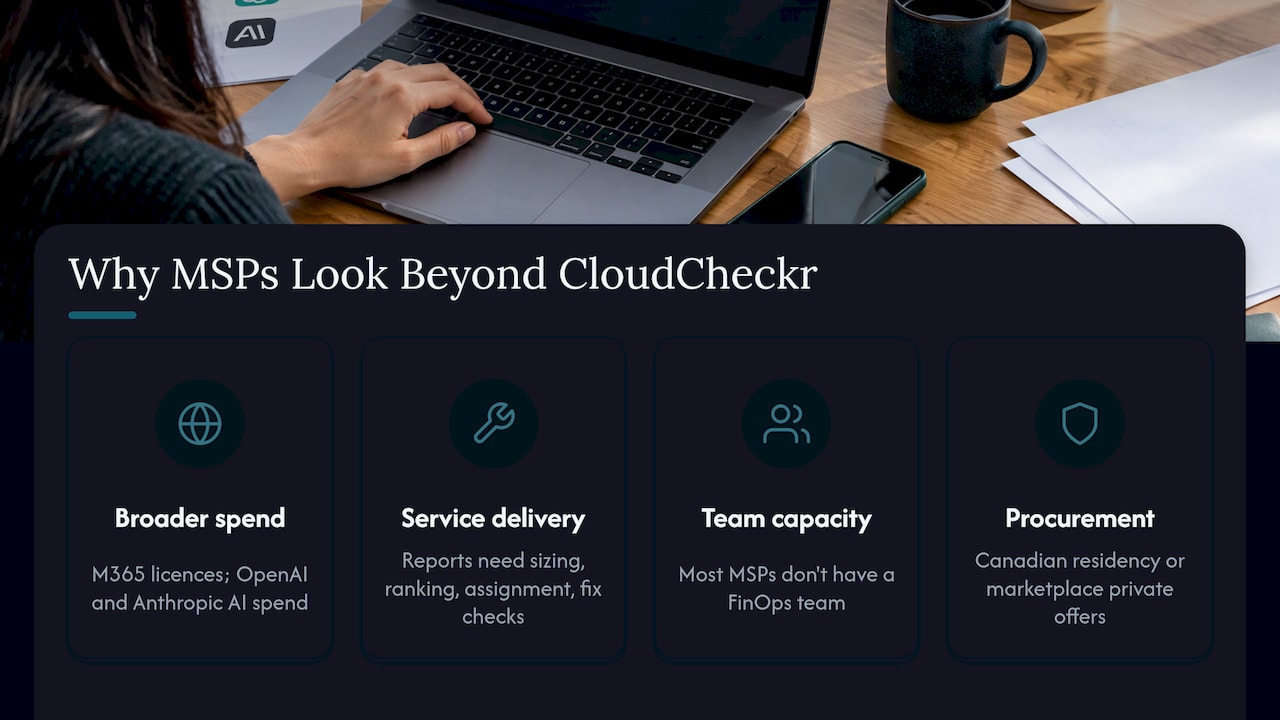
In our experience talking with partners, the reasons cluster around a handful of things:
Coverage has moved. Two years ago, “cloud cost” meant Azure, AWS and maybe Google Cloud. Now your customers also have Microsoft 365 licences they’re overbuying and AI spend on OpenAI and Anthropic that nobody budgeted. A tool that sees only infrastructure bills misses a growing share of the invoice.
A dashboard isn’t a service. A report that says “here’s your waste” still needs someone to size it, rank it, assign it and check that it was fixed. If that someone is your senior engineer on a Friday afternoon, you haven’t built a recurring service. You’ve built a favor.
Your team is the constraint. Most MSPs don’t have a FinOps team and shouldn’t need to hire one before the first customer signs.
Procurement and data residency. Some customers want Canadian data residency, or want to buy through a marketplace private offer. Those are practical filters, and not every platform meets them.
If none of these apply, you may be fine where you are. If one or more does, read on.
What to compare before you pick
Forget the long feature grids. For an MSP, five questions decide this.
- Can you run all your customers from one place? Multi-tenancy means one workspace for many customers, with each customer’s data kept separate. Without it, you’re logging into a separate account per client.
- Can you send reports under your brand? White-label reporting means the monthly report carries your name, not the vendor’s.
- What does it cover? Azure, AWS, Google Cloud, Microsoft 365 licences and AI spend, ideally in one view.
- Do findings become work? A finding that never becomes a ticket with an owner rarely becomes savings.
- How much of the service can you deliver without hiring? This is the one that decides your margin.
Keep those five in mind. We’ll score each group against them.
The main CloudCheckr alternatives
Native cloud tools, such as AWS Cost Explorer
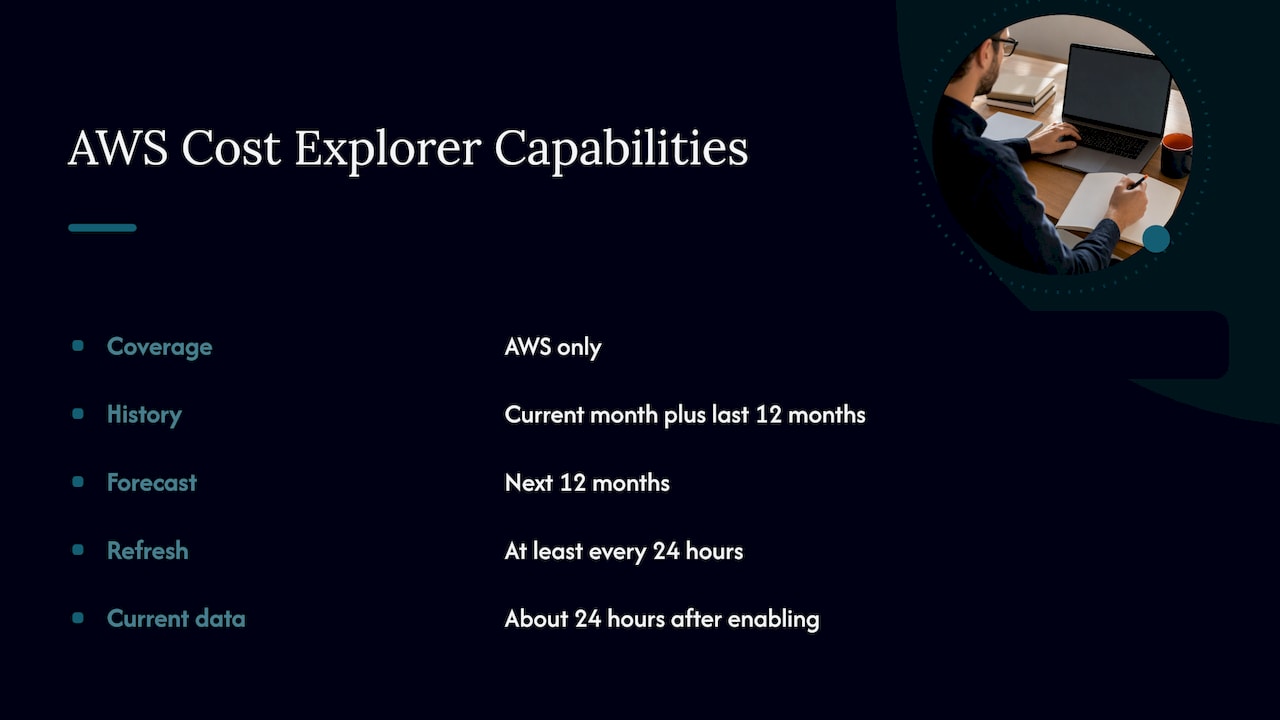
Start with what’s free and already there. AWS’s Cost Explorer lets you build custom reports on cost and usage, covers the current month plus the last 12 months, forecasts the next 12 months and refreshes data at least every 24 hours. It also detects anomalies. AWS’s documentation explains that you enable it in the Billing and Cost Management console, and that current month data shows up in about 24 hours after you do.
For a single AWS account, that’s a solid starting point. For an MSP, it has an obvious limit: it’s AWS only. Azure, Google Cloud, Microsoft 365 and AI spend each live in their own tools, with their own logins and report formats. You can’t send one branded monthly report to a customer, and nobody ranks the fixes across clouds for you.
Use native tools as a data source and a sanity check. Don’t build a service on them.
FinOps platforms built for in-house teams
This is where most of the names in the search results sit: Apptio Cloudability, CloudHealth, CloudZero, Spot by NetApp, Flexera, CloudBolt, Ternary, Anodot and DoiT. They’re capable products, and several have deep analytics, allocation and commitment management. Most were designed with an enterprise FinOps practitioner in mind: someone inside the customer who logs in, reads the data and acts.
That’s a great fit when the customer has that person. For an MSP selling to mid-market customers who don’t, you’re asking the customer to adopt a tool they’ll never open. We’ve gone through one of these in more detail in our guide to CloudZero alternatives, and the same logic applies here: check whether the product expects a practitioner on the other side.
Pricing models also differ. Some are priced as a share of cloud spend, others on a platform fee. Whichever model you look at, ask how it behaves when you add forty small customers instead of two large ones, since that’s the shape of an MSP book. Our piece on what a FinOps service costs and what you get walks through how to think about that.
MSP-focused platforms
The market has noticed that partners are a distinct buyer. Channel Insider reported in August 2024 that Vantage launched Vantage for MSPs, with single-platform visibility into all clients, customizable billing tools, partner-friendly pricing and free migration support for partners switching from CloudHealth or CloudCheckr. It’s a sign of where the category is heading: one portal, many customers, billing built in.
That’s the multi-tenant piece. It solves the “separate account per client” headache. The question to ask of any platform in this group is what happens after the data is visible. Who prioritizes the findings? Who tracks them to done? Who explains the result to the customer each month?
EverythingCloud
EverythingCloud is a built platform that works through MSPs, cloud partners and distributors. The partner owns the customer relationship. We provide the multi-tenant platform and the FinOps expertise behind the service.
Against the five questions:
- One place for all customers: one multi-tenant workspace.
- Your brand: white-label monthly reports.
- Coverage: Azure, AWS, Google Cloud, Microsoft 365 licence optimization, AI spend such as OpenAI and Anthropic, and security posture.
- Findings into work: the platform finds waste, ranks fixes by savings and effort, and turns them into tracked work.
- Hiring: it’s designed so you can deliver the service without building a FinOps team.
It can also be deployed in Canada, and Azure Marketplace private offers are available. If you sell to Canadian customers with data residency requirements, that matters. We also work directly with mid-market and enterprise organizations that want the optimization done for them rather than another dashboard.
Side by side
| Option | Multi-cloud coverage | Built for MSP multi-tenancy | White-label reporting | Does the work or just shows it |
|---|---|---|---|---|
| Native tools (AWS Cost Explorer) | One cloud only | No | No | Shows it |
| FinOps platforms for in-house teams | Varies by product | Varies by product | Varies by product | Mostly shows it, expects a practitioner |
| MSP-focused platforms | Varies by product | Yes, by design | Check per vendor | Visibility first |
| EverythingCloud | Azure, AWS, Google Cloud, Microsoft 365, AI spend | Yes | Yes | Findings become tracked work |
For the “varies” cells, check the vendor’s own documentation against your customer mix. We’d rather you verify than take our shorthand as gospel.
What this means for your business
The tool matters less than what it lets you sell. Here’s how we’d think about it commercially.
Building a recurring service
Cost work is naturally recurring. Cloud bills change every month, new workloads show up, commitments expire and licences drift. That’s a monthly service with a monthly report, which is exactly what recurring revenue looks like. A tool that only gives you a dashboard gives you a one-off assessment at best. A platform that tracks work through to completion gives you something you can price per customer, per month.
Protecting margin
Here’s a quiet problem. When customers overspend on cloud, and you resell it, the waste sits in the bill you manage. Margin erodes slowly, and nobody sends an alert. And if you add a tool whose cost grows faster than what you can bill for the service, you’ve traded one leak for another. Count the tooling cost, the people hours and the billable fee together, not separately.
Keeping customers longer
Customers leave when they can’t see what you do. A branded monthly report that shows what was found, what was fixed and what’s next gives them a reason to stay. It also gives you a natural conversation to have every month, which is better than a renewal call once a year.
Reducing work for your team
The hidden cost of any tool is the hours it takes to run. Ranking fixes by savings and effort means your engineers start with the work that pays off fastest. Turning findings into tracked tasks means nothing lives in someone’s head or a spreadsheet. If your service desk already works from tickets, this fits how they operate.
How an MSP delivers cost management for clients
The delivery model is simpler than most people expect. Here’s the routine, whichever platform you pick.
- Connect the customer’s environments. Azure, AWS, Google Cloud and Microsoft 365, plus AI platforms. This is where multi-tenancy pays off: you do it inside one workspace.
- Find the waste. Idle resources, oversized instances, unused licences, uncovered commitments and unexpected AI usage.
- Rank by savings and effort. Not every finding deserves a ticket today. Quick wins go first.
- Turn findings into tracked work. Assign an owner, set a status, and follow it to done.
- Verify the savings. Check the next bill, not just the plan.
- Report monthly under your brand. Keep it short and plain, and lead with what changed.
Watch for anomalies between reports too. A spike that sits for three weeks becomes a bill nobody wants to explain. Our article on cloud cost anomaly detection covers how to catch those within hours.
Where does this go wrong? Step four. Teams are good at finding and weak at following through. That’s the point where a platform that tracks the work, and FinOps expertise sitting behind it, takes weight off your team.
Perspective
We built EverythingCloud around one observation: visibility matters, but someone still has to own the work.
Most cost tools stop at a dashboard. That’s fine for a company with a FinOps team. It’s a poor fit for an MSP who wants to add a recurring service without hiring one. The partner already has the customer, the trust and the contract. What they’re missing is the machinery and the expertise to deliver cost work every month.
So we work through partners. You own the customer relationship, and we help deliver the service behind it: one multi-tenant workspace, findings turned into tracked work, and white-label reports that carry your name.
If you’re comparing CloudCheckr alternatives, our advice is simple. Pick the option that lets you bill for outcomes, not one that gives you a new login to manage. We think that’s a platform built for partners, and that’s what we’ve built.
Dan Belkie
Choosing the right one for your situation
You’re an MSP or CSP with customers who have no FinOps person. You need delivery, not just data. Look for multi-tenancy, white-label reporting and tracked work. This is the group we built for.
You’re a distributor. You need something your partners can sell under their own brand. White-label reporting and a multi-tenant model are non-negotiable, and the platform should work through your channel rather than around it.
You’re a mid-market finance or IT leader. If you want ongoing optimization done for you, ask any vendor who does the work each month. A tool that needs your team to act on it is another dashboard.
You have a strong in-house FinOps team. A practitioner-focused platform may suit you. That’s a different job from what most MSPs are trying to do.
Work with us
If you’re ready to add cost, Microsoft 365 licence and security posture work to your portfolio, the Founding MSP Program is a small partner cohort. You get the platform and the FinOps expertise behind the service, and you keep the customer relationship. If you’d rather start small, we can also work with one of your customers first.
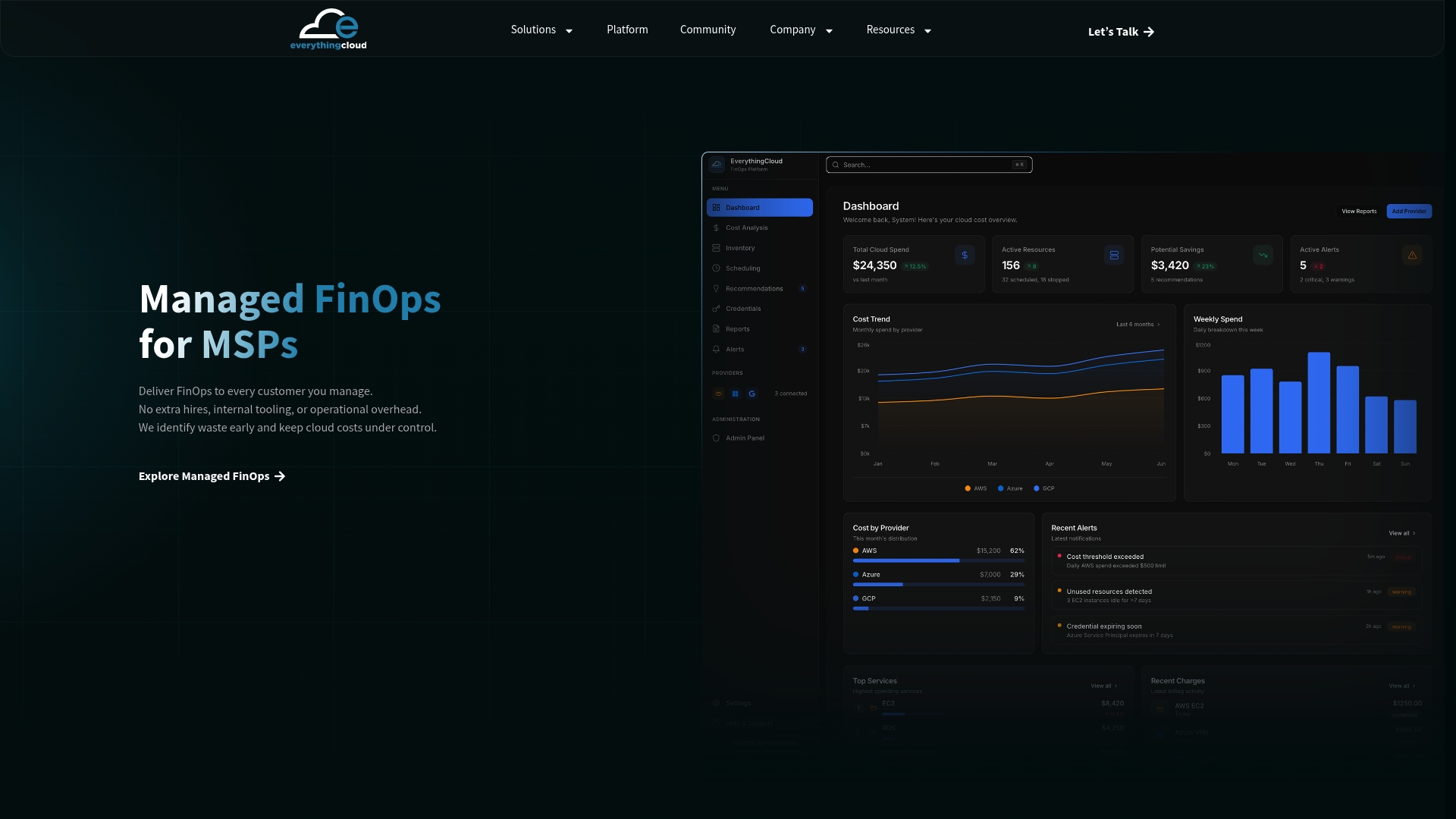
You can also see how our Managed FinOps for MSPs service fits an existing customer base.
FAQ
Why do MSPs switch away from CloudCheckr?
Usually it’s coverage, workflow or economics. Customers now run Microsoft 365 and AI spend alongside the big three clouds, and partners want findings to become tracked work, not just reports. Others simply want a different pricing fit for their customer mix.
Is AWS Cost Explorer a good enough alternative?
For one AWS account, it’s a useful tool. AWS says it covers the current month plus 12 months of history and forecasts the next 12 months. For an MSP serving many customers across several clouds, it can’t give you one multi-tenant view or a branded report.
What should an MSP look for in a multi-tenant cost platform?
One workspace for all customers, separated data, white-label reports, billing support and coverage across Azure, AWS, Google Cloud, Microsoft 365 and AI spend. Then ask how findings become work. Vantage’s MSP launch shows the market now treats single-portal partner management as a core need.
Can I deliver this without hiring a FinOps team?
Yes, if the platform ranks fixes by savings and effort and tracks them to done, and the vendor provides FinOps expertise behind the service. That’s how EverythingCloud is designed to work with partners.
Sources
- AWS Cost Explorer product page
- Enabling Cost Explorer, AWS documentation
- Channel Insider: Vantage launches MSP-focused product