Start with savings.
Tagging comes later.
Ownership explains the bill. Optimization reduces it.
THE FINOPS ORDER OF OPERATIONS
Tags explain the bill.
Optimization changes it.
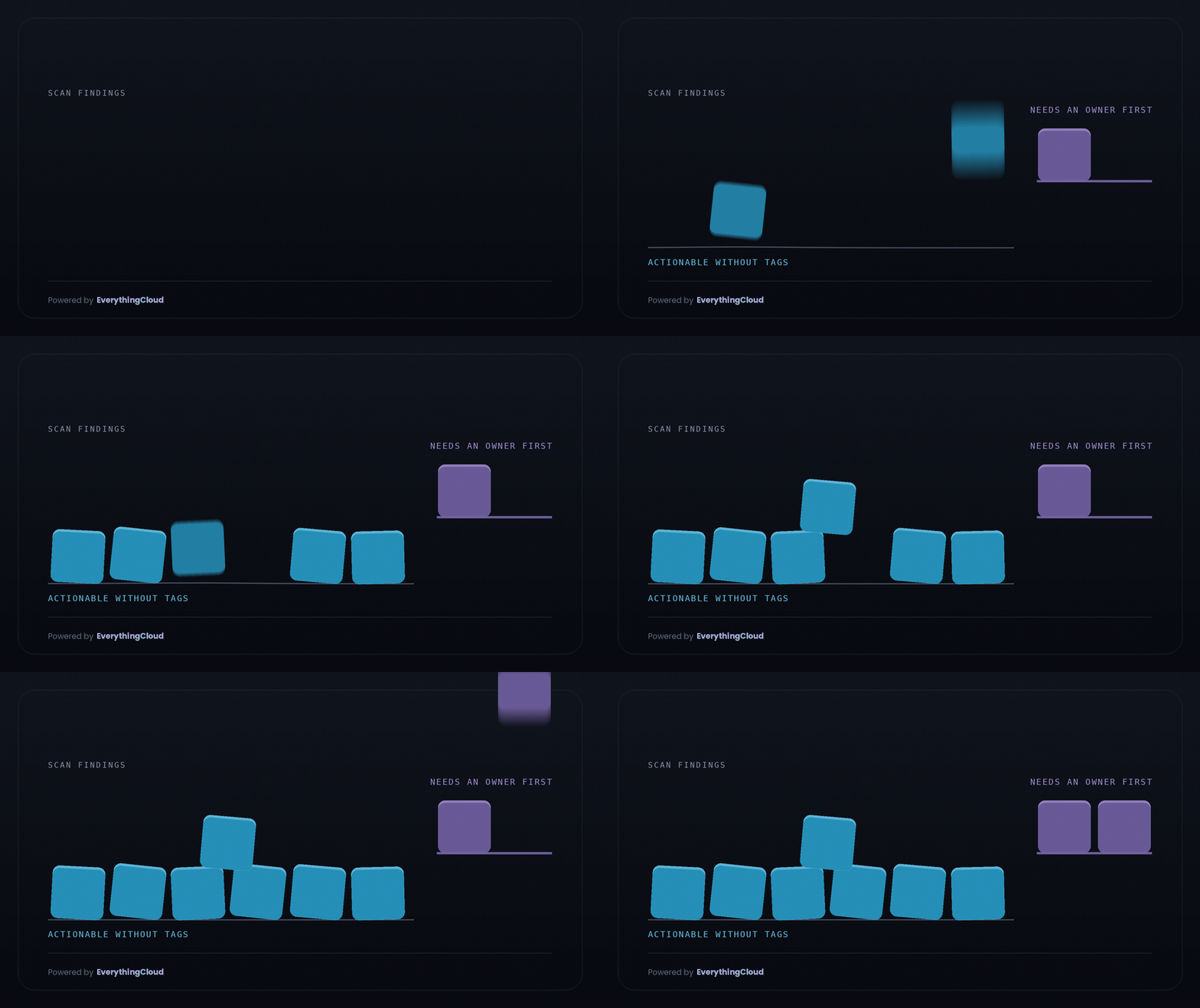
Ownership matters. But the fastest savings usually come from resources that already need attention — before allocation begins.
MOST TEAMS START HERE
Governance path
01
Define ownership
Standards, naming rules, agreements
02
Backfill resources
Update what already exists
03
Allocate spend
Understand who owns the cost
Governance improved
WHERE SAVINGS START
Optimization path
01
Find waste
Idle resources, oversized compute, unused storage
02
Reduce cost
Changes appear on the next invoice
03
Verify savings
Then add accountability
Savings realized
THE PRACTICAL RULE
Take savings first. Use them to fund governance.
FIND
PRIORITIZE
EXECUTE
VERIFY
Managed FinOps turns recommendations into an owned operating process.
A Recommendation Is Not a Result
Most platforms stop at the finding. Someone has to own what happens next
Without Ownership:
- Findings sit in a queue with no owner
- Alerts arrive without a next step
- Savings get counted the moment they are spotted
- The same waste returns next month
With Managed FinOps
- Findings arrive as tickets with an owner
- Low risk reversible actions run on approval
- Larger changes route to the MSP or escalate to us
- Savings count once a later invoice confirms them

Run Managed FinOps at Scale
Launch faster. Reduce operational overhead. Scale across customers.
Reduce
Skip the cost of recruiting, training, and retaining a dedicated FinOps team.
Earn
Go live in weeks and bill FinOps as a service rather than carrying it as cost.
Scale
Add customers without adding headcount or delivery complexity.